
Mexico City does not need the World Cup to be a great destination. But the World Cup makes it an unmissable one.
Start with this itinerary
Open this route in Honge as your starting point, then shape the days, stays, and pace around how you travel.
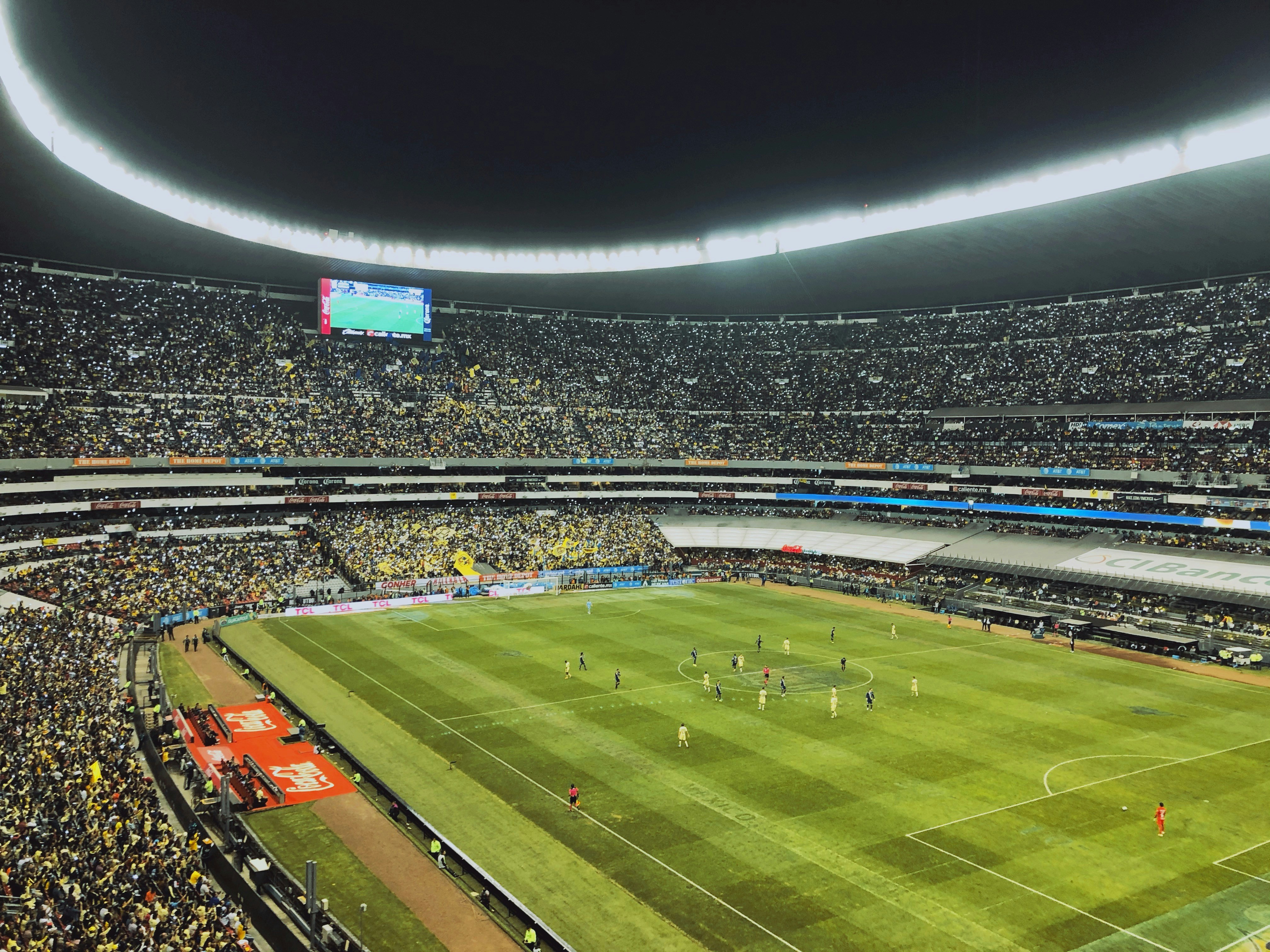
CDMX is already one of the world's great cities — for food, culture, history, nightlife, and sheer scale. In June and July 2026 it also becomes the place where football began this tournament. Estadio Azteca, the most storied stadium in World Cup history, is hosting the opening match. The same ground where Maradona scored the Hand of God in 1986. The same ground where Pelé's Brazil dismantled Italy in 1970. Now the first stadium ever to host World Cup matches across three separate tournaments.
That context matters when you are planning a friends trip around it.
But Mexico City also rewards the gaps between match days. Every neighbourhood has its own personality. The food alone — from a two-peso taco on a street corner to a meal in a Michelin-listed restaurant — could justify the trip on its own. Add in ancient pyramids, colonial architecture, Aztec ruins beneath a modern city, Frida Kahlo's blue house, and neighbourhoods built for sitting outside with a mezcal until midnight, and ten days suddenly feels tight.
This itinerary is built around World Cup match days at the Azteca, with everything else planned to make the most of the city around them. The matches anchor the trip. The city fills it out.
Why 10 Days Works for This Trip
If your group is anchoring this trip around World Cup matches, ten days is the right amount of time.
Mexico City is enormous — the third-largest city in the world by population — but for visitors, most of what matters clusters across a manageable set of neighbourhoods. You do not need to see all of it. You need to see enough of it that the city starts to make sense, and then let the rest of the time be less structured.
Ten days gives you:
- One or two match days at Estadio Azteca, with proper build-up and recovery time around them
- A full day in the Centro Histórico without rushing it
- A proper day at Chapultepec and the Museum of Anthropology
- A Teotihuacan day trip without sacrificing the evening
- Real time in Roma, Condesa, and Coyoacán
- Days that are not scheduled — just wandering, eating, and following whatever the group wants to do
The trips that feel best are not the ones that maximise the sightseeing list. They are the ones where there is enough space between the big days to actually breathe.
The World Cup at Estadio Azteca: What You Need to Know
Estadio Azteca is hosting five matches during the 2026 FIFA World Cup.
The opening match of the entire tournament is here on June 11 — Mexico's first game of the group stage, against South Africa in Group A, which also includes South Korea and Czechia. That match kicks off the first World Cup hosted in North America since 1994, and the energy around the city that day will be unlike anything most visitors have experienced.
Mexico City has declared June 11 a local public holiday for the occasion. The city will be celebrating before the first whistle blows.
After the opener, Azteca hosts two more group stage matches — June 17 and June 24 — followed by a Round of 32 match on June 30 and a Round of 16 match on July 5.
Tournament capacity at the Azteca is 72,766. Tickets will be some of the hardest to get in the tournament. If your group has them, organise this itinerary around those dates. If not, the city itself becomes the venue: the fan zones, the outdoor screens, the bars and taco stands in Roma and Condesa, the streets in the hours after a Mexico goal.
How Mexico City Works for a Group
Mexico City is too big to navigate randomly. The key is understanding that the city works by neighbourhood, and that planning your days by area — rather than crossing the city back and forth — makes everything easier and more enjoyable.
For most friend groups, the practical map looks like this:
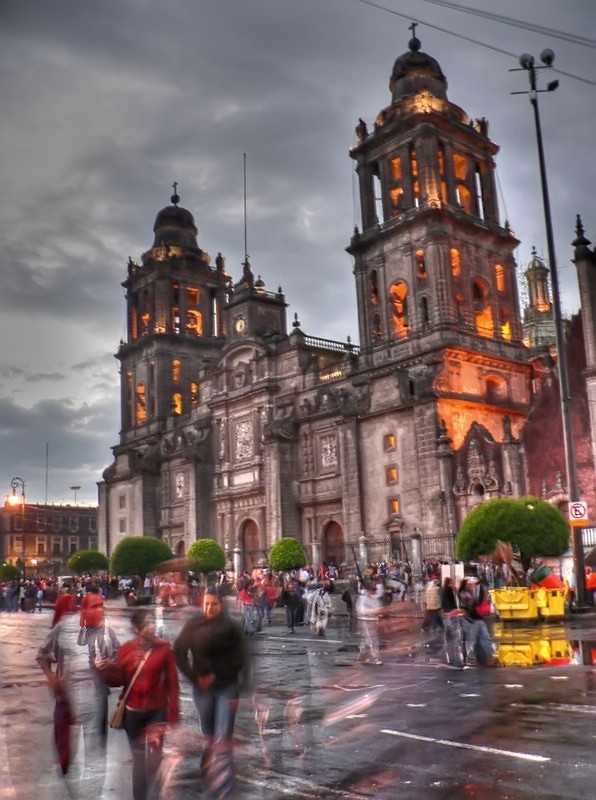
- Centro Histórico — history, architecture, the Zócalo, Templo Mayor, and Bellas Artes. One full day.
- Roma Norte and Condesa — your base. Tree-lined streets, the best casual restaurants in the city, mezcal bars, coffee, and the easiest evening energy.
- Chapultepec and Polanco — the park, the museums, and if your group wants to eat well one evening, Polanco is where to do it.
- Coyoacán — the bohemian south: the Frida Kahlo Museum, weekend market stalls, plazas designed for sitting in.
- Estadio Azteca — further south, not walkable from anywhere central. Plan transit in advance on match days.
Where to stay: Roma Norte or Condesa. Both neighbourhoods are well-connected, full of options at different price points, and give you immediate access to the best evening activity in Mexico City, which is walking slowly between restaurants and deciding where to eat next.
What to Eat in Mexico City
This needs its own section because Mexico City is, genuinely, one of the best food cities in the world.
It now has its own Michelin Guide, but that is not the point. The point is that the food is exceptional at every level — from a taco at a street cart that costs almost nothing, to a long lunch at a serious restaurant in Roma, to a mezcal bar where the conversation runs until 2am.
The non-negotiables for any group trip:
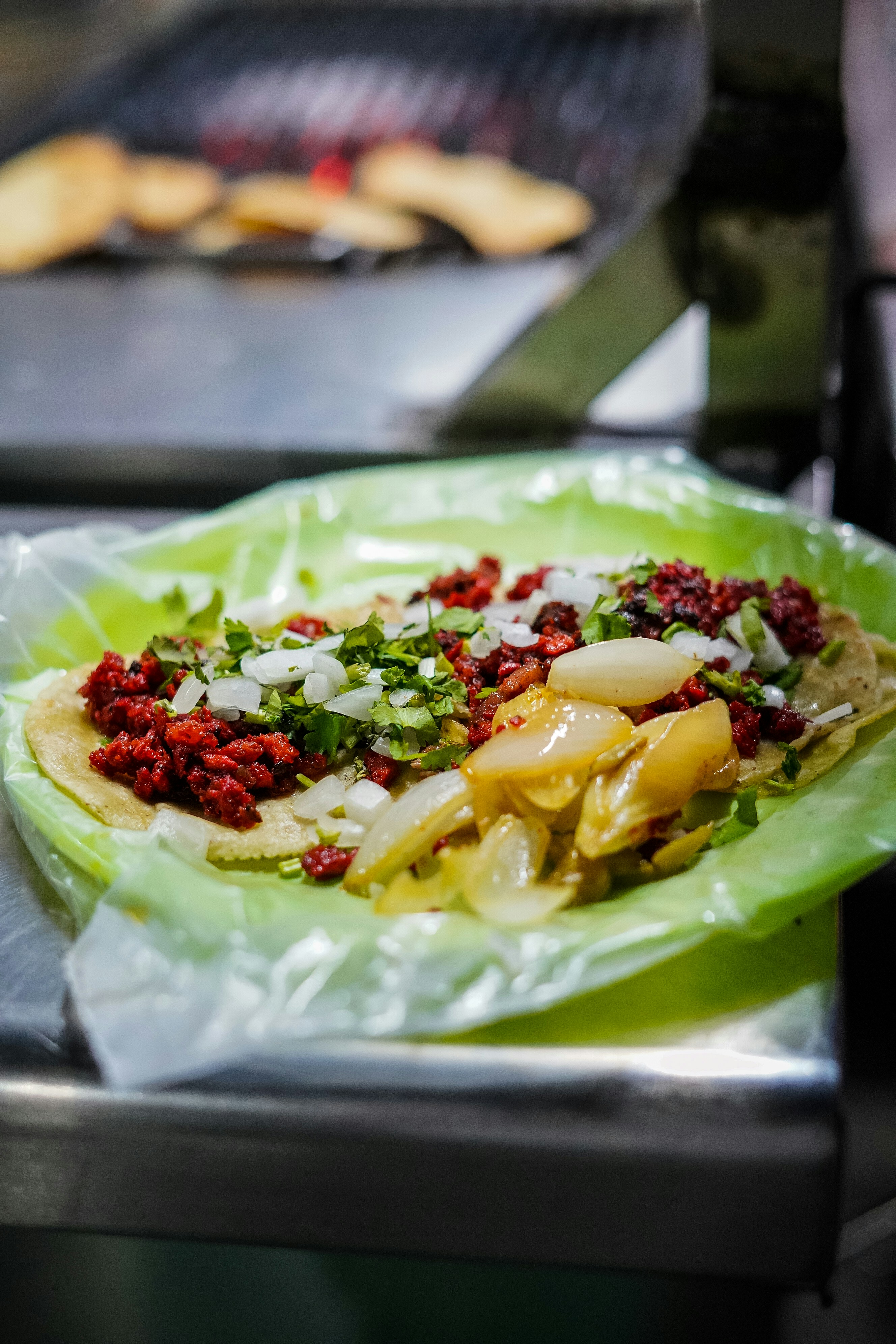
- Tacos al pastor: the Mexico City standard. Pork cooked on a vertical spit, sliced onto a small corn tortilla with pineapple and salsa. At its best from a proper taquería, standing up, at almost any hour.
- Chilaquiles: the correct morning-after food. Tortilla chips simmered in green or red salsa, topped with crema, cheese, and an egg. Order them wherever your hotel sends you for breakfast, or find a local spot near the market.
- Tamales: from a street stall or a morning market, never from a restaurant. Masa stuffed with chicken or pork or rajas, wrapped in corn husks and steamed until soft. Eaten with atole or coffee.
- Quesadillas de huitlacoche: corn fungus quesadillas that sound strange and taste extraordinary. Found at market stalls, not tourist menus.
- Tlayudas: Oaxacan flatbreads piled with beans, cheese, and meat. If you find a good Oaxacan restaurant in Roma, go twice.
- Mezcal: not a food, but treat it as one. Mexico City's mezcal bar scene is serious. Let someone who knows what they are doing pour the first one.
Day 1 — Arrival: Land, Drop Bags, Find the Nearest Taco
Land at Benito Juárez International Airport, take an authorised taxi or pre-book a transfer to your accommodation in Roma or Condesa, and do not try to be ambitious.
Mexico City is 2,240 m (7,350 ft) above sea level — not as extreme as Cusco, but enough that some people notice a slight heaviness after a long flight. Drink water, eat something real, and walk the neighbourhood before deciding anything more structured.
The first evening should be simple: find a taquería near your accommodation, order tacos al pastor, get a mezcal if the group wants one, and let Mexico City arrive gradually. The best discovery days begin without an agenda.
Day 2 — Centro Histórico: The Zócalo, Templo Mayor & Bellas Artes
This is your Centro day, and it earns a full one.
Start at the Zócalo — one of the largest public squares in the world, flanked by the Metropolitan Cathedral on one side and the National Palace on the other. Stand in the middle of it. The scale takes a moment to land. Mexico City was built on top of Tenochtitlan, the Aztec island capital, and the Zócalo is where that city's ceremonial heart was.
Which is why the Templo Mayor, right at the edge of the square, is so quietly extraordinary. When Spanish colonisers demolished Tenochtitlan in 1521, they built Mexico City directly on top of it. The Templo Mayor — the great pyramid at the centre of the Aztec world — was only rediscovered in 1978 when a construction crew hit it accidentally. It is now an open archaeological site where you can walk around the excavated ruins with the skyscrapers of a modern city visible on every side.
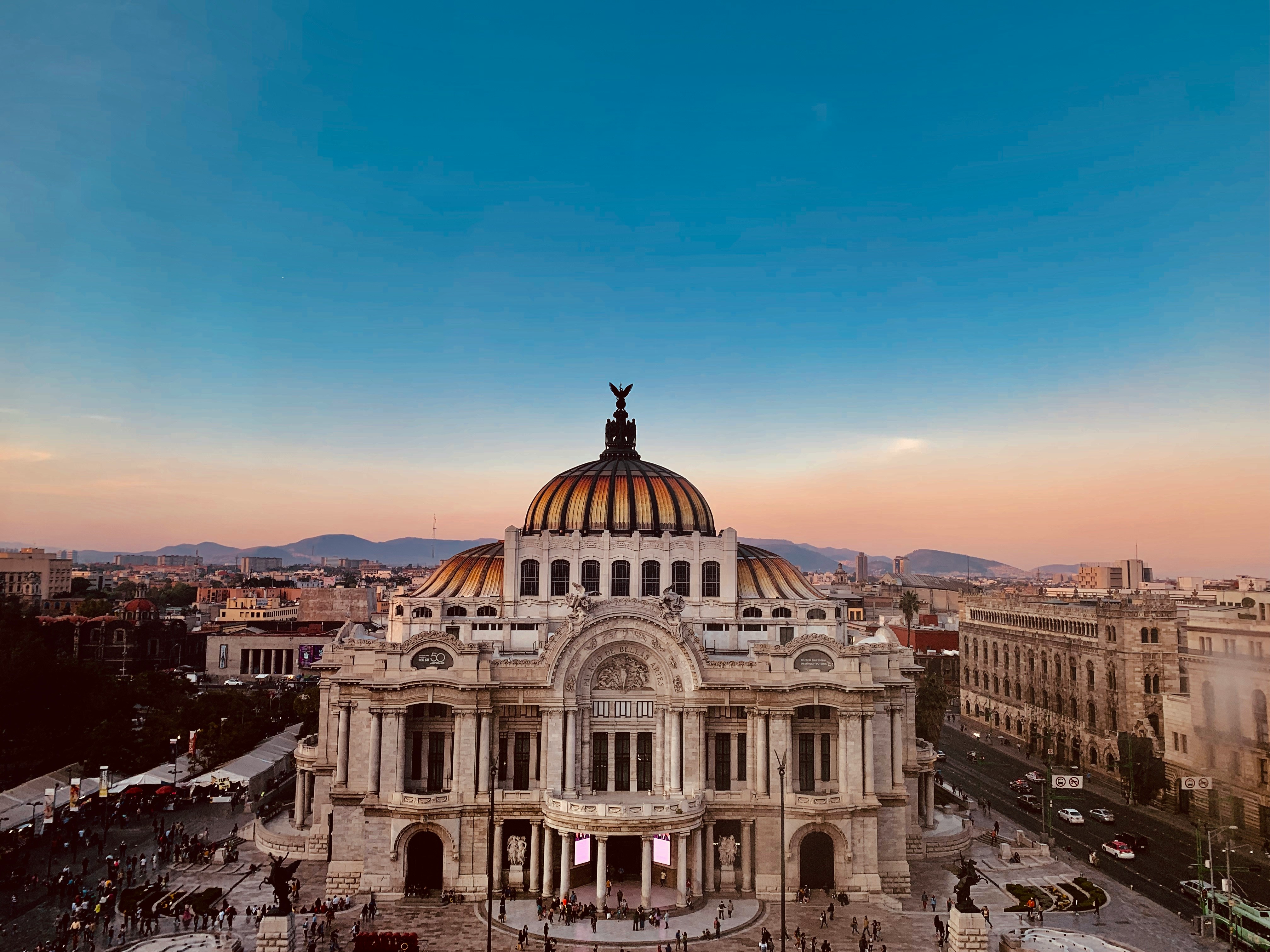
Spend the late morning at the Palacio de Bellas Artes, the Art Nouveau and Art Deco cultural palace on the western edge of the historic centre. The exterior alone is worth it. Inside, the Diego Rivera murals on the upper floors are some of the most impressive public art in Mexico.
By early afternoon, the Centro starts to feel like it wants a slower pace. Eat somewhere nearby — there are good sit-down lunch spots in the streets around Bellas Artes — then walk slowly back toward your neighbourhood via the Alameda Central park.
Evening in Roma or Condesa. The Centro is lively during the day but quieter at night; your neighbourhood is where the evening life is.
Day 3 — Chapultepec: The Castle, the Museum & Polanco for Dinner
Chapultepec is the park at the centre of the city, and it is larger and more varied than any park has any right to be: over 1,600 acres of trees, lakes, museums, a castle, a zoo, and botanical gardens.
Start at Chapultepec Castle, which sits on the highest hill in the park with views back across the whole city. It was the official residence of Mexican presidents until 1939 and now houses the National History Museum. The murals inside are among the best in the country. The views from the terrace remind you that you are standing in one of the largest cities on earth.
Walk down from the castle and spend the rest of the morning at the National Museum of Anthropology — one of the finest museums in the world, full stop. Galleries cover the Mexica, Maya, Olmec, Zapotec, Teotihuacan, and other Mesoamerican civilisations with depth and clarity that makes Teotihuacan the next day feel three times richer. The Aztec Sun Stone alone draws more visitors than most entire museums. Give the group at least two hours here, more if anyone gets absorbed.
Walk straight through into Polanco — the neighbourhood that borders Chapultepec's north edge — for a late lunch or afternoon coffee. If there is one evening where the group wants a proper restaurant meal rather than street food, Polanco is where it happens. The dining here is more formal, more expensive, and worth it at least once.
Day 4 — Match Day: Mexico vs South Africa at Estadio Azteca
June 11. The day the whole tournament starts.
Mexico City will feel different from the moment the group wakes up. The opening match at the Azteca carries the energy of a city that has been waiting three decades to host this again.
Make Day 4 about the match, not about sightseeing. Eat a proper lunch somewhere in the neighbourhood, then begin moving toward the stadium earlier than feels necessary. The Azteca is in the south of the city and the area fills up hours before kickoff. Factor in two hours minimum from central Roma.
If your group has tickets: the experience inside the Azteca on a Mexico match day is something that does not translate well into description. The stadium holds over 72,000. Mexican fans sing, drum, jump, and continue doing all three simultaneously for ninety minutes. It is one of the loudest sporting venues in the world, and on the opening night of a World Cup, it is that multiplied.
If your group does not have tickets: do not stay inside the hotel. The Zócalo, the fan zones across the city, and every bar and taquería in Roma with a screen will be packed. The city becomes the venue. Watching a Mexico goal from a packed street bar in Condesa is its own thing entirely.
Day 5 — Recovery Day: Roma Norte, Markets & a Long Lunch
The day after a World Cup match is not a sightseeing day. It is a Roma Norte day.
Walk slowly. Find chilaquiles. Sit in a café on Álvaro Obregón or Amsterdam Avenue and watch the city move at a pace that feels nothing like a World Cup host city the morning after a goal. Then let the group find its own rhythm.
Roma Norte is one of the most walkable, pleasant neighbourhoods in Mexico City. Tree-lined streets, good bookshops, gallery spaces, juice stands, and restaurants that earn their reputation without trying to look like they do. The Saturday market at Mercado Medellín is nearby and worth the walk — fresh produce, prepared food stalls, cheese, and a reliable chaos of activity that makes it feel like the neighbourhood doing what it actually does.
Keep the afternoon unscheduled. The best days in Mexico City often come from having nothing planned after lunch and seeing where that leads.
Day 6 — Teotihuacan: Pyramids Before the City Wakes Up
Set the alarm.
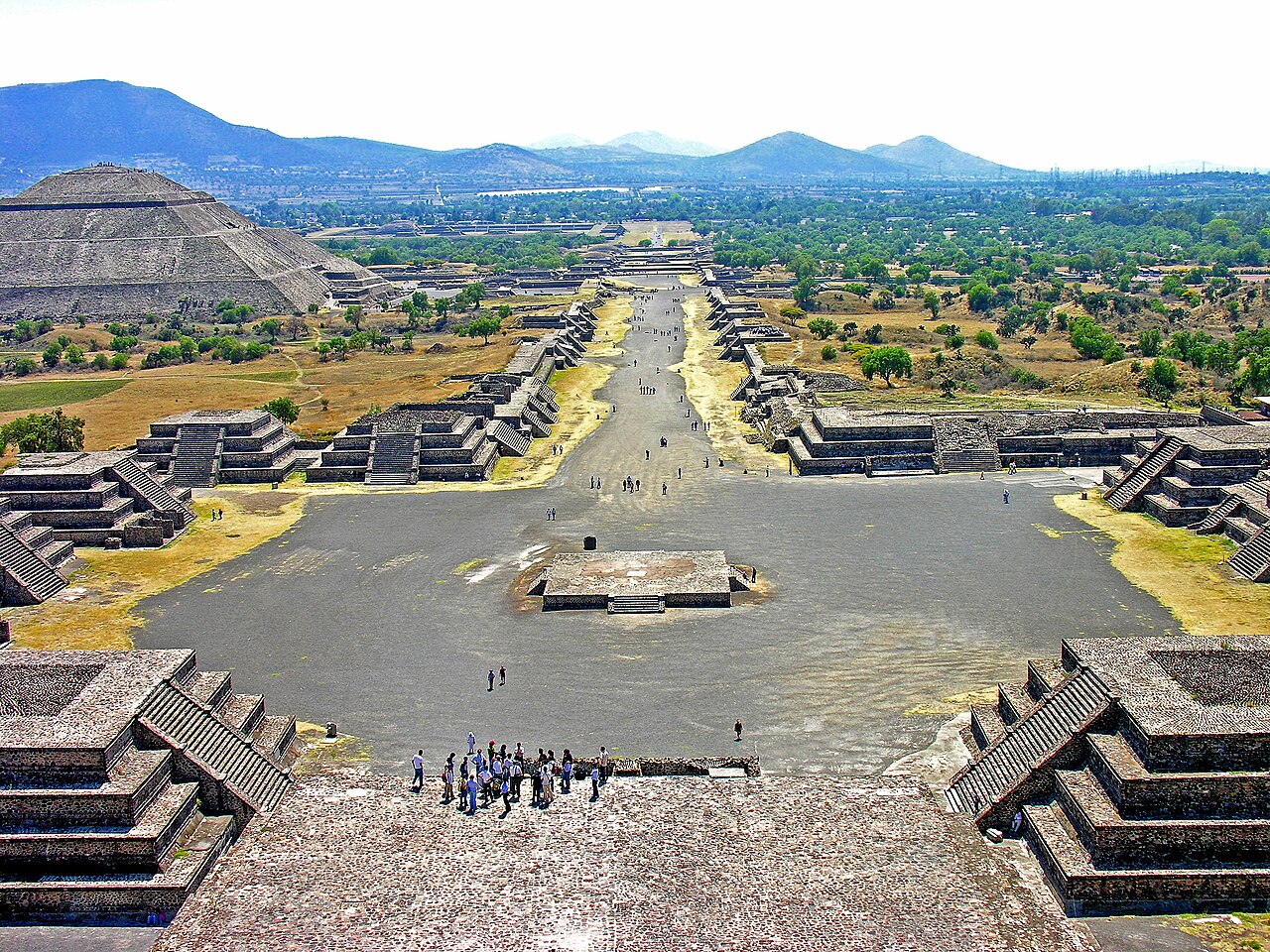
Teotihuacan is 45 minutes northeast of Mexico City and it is one of the most extraordinary ancient sites in the Americas. The Pyramid of the Sun stands 65 m (213 ft) tall and took roughly two million tonnes of stone to build. At its height, somewhere between 100,000 and 200,000 people lived in this city — making it one of the largest urban centres in the ancient world.
Take the first departure by 8 AM, either by organised group tour or by bus from the Terminal Norte. Arriving early means the site is cool, the light is good, the crowds are thin, and you can climb the Pyramid of the Sun before the heat turns it into a negotiation with yourself.
Walk the Avenue of the Dead at your own pace. Climb the Pyramid of the Moon for a different viewpoint back along the avenue. Visit the Temple of Quetzalcoatl if the group has energy. Then eat at one of the restaurants near the site — basic food, good tlayudas, cold drinks — before heading back to the city by early afternoon.
You will be back in Roma by 3pm with the rest of the day free. That evening tends to take care of itself.
Day 7 — Coyoacán: Frida Kahlo, Markets & an Afternoon That Slows Down
Coyoacán is the southern neighbourhood that feels most like a village inside a city.
Tree-lined cobbled streets, low colonial buildings, market stalls, and a central plaza where people sit on benches and stay for hours without feeling like they should be somewhere else. It is a different pace from Roma and Condesa, and that difference is the point.
The main reason most people come is the Frida Kahlo Museum, or Casa Azul — the bright blue house where Kahlo was born, lived, and died. The house is kept largely as it was, with her studio, personal belongings, and the garden she worked in all intact. Book tickets in advance. It sells out, sometimes weeks ahead during peak season.
After the museum, walk to the central market and eat. Tostadas at Mercado de Coyoacán are one of those lunch experiences that friends bring up years later. Order several different ones. Disagree about which is best. Eat another round.
Spend the afternoon slowly. Walk the plazas. Have coffee. Look at the buildings. The point of Coyoacán is not to rush through it toward the next thing.
Day 8 — Second Match Day or Free Day in the City
If your group has tickets to the June 17 match at the Azteca, today is structured the same way as Day 4 — build-up, early transit, full commitment to the occasion.
If not, Day 8 is the day the trip becomes whatever the group most wants it to be.
Some options worth considering:
- Museo Soumaya in Polanco — free entry, one of the most architecturally striking buildings in the city, with an enormous collection including Rodin sculptures and pre-Columbian pieces.
- San Ángel Saturday Bazaar (Bazar del Sábado) — if Day 8 falls on a Saturday, this craft market in the San Ángel neighbourhood is one of the best in the city for jewellery, textiles, and artwork.
- Xochimilco — colored trajinera boats on the ancient canal network south of the city. More festive than scenic, and extremely good if the group is in the right mood for it.
- A second, slower Condesa morning — sometimes the right answer is finding the café you keep walking past and finally sitting in it for two hours.
Day 9 — Neighbourhoods You Have Not Finished Yet
By Day 9, the trip has its own logic. There will be the restaurant you meant to go back to. The street you walked down once and meant to explore properly. The mezcal bar someone mentioned on Day 3 that you finally have time for.
Use this day to finish those things.
If the group has not been to Tlatelolco — the Plaza de las Tres Culturas, where Aztec ruins, a Spanish colonial church, and a 1960s apartment complex all share the same ground — it is worth a couple of hours. The history here is layered and difficult: this was the site of a 1968 massacre of student protestors by the Mexican government, and the plaza acknowledges it. It is one of those places that does not feel like a tourist attraction, which is exactly why it is worth visiting.
Otherwise, wander. Buy the things you kept almost buying. Eat the meal you planned and kept rescheduling. Let the city do what it does best, which is reward attention without demanding it.
Day 10 — Final Morning, Last Tacos & Departure
Do not try to squeeze in one more attraction on the final morning.
Mexico City's Benito Juárez airport is around 30–45 minutes from Roma or Condesa in normal traffic, but traffic in CDMX is not always normal. Give yourself more time than you think you need.
Spend the final morning in the neighbourhood. Coffee, chilaquiles one more time, a slow walk. Whatever the group has not done yet that feels small enough to fit in a couple of hours. Then transfer to the airport, and let the trip close at its own pace.
The impulse to add one more museum, one more market, one more neighbourhood to the final morning is how good trips end in a rush. The city has had ten days to make an impression. Let that be enough.
Where to Stay for a Friends Group in CDMX
For a group of friends in Mexico City, neighbourhood matters more than hotel star rating.
Roma Norte is the default recommendation. It has the best density of good restaurants per block of any neighbourhood in the city, it is walkable to Condesa and a short Uber from everywhere else, and it works equally well for a quiet breakfast morning and a late night out.
Condesa is the slightly more residential, slightly quieter neighbour. Art Deco apartment buildings, Parque México in the middle of it, and a handful of restaurants and bars that would be famous anywhere else in the world. If your group wants a bit more calm alongside the social energy, Condesa is the call.
Polanco suits groups that want higher-end hotels and do not mind paying for them. Great access to Chapultepec Park. Less personality per block than Roma, but more comfort.
Avoid the Centro Histórico for an extended stay — the days there are great, but the evenings are much quieter than in the western neighbourhoods.
What to Book Before You Arrive
Mexico City is forgiving about spontaneity in most areas, but a few things reward advance planning.
- Frida Kahlo Museum tickets: book online well in advance. It regularly sells out days ahead during the summer.
- World Cup match tickets: if not already sorted, check the official FIFA resale platform. Do not buy from third parties outside official channels.
- Any serious restaurant you care about: Michelin-listed places in Roma and Polanco fill up. If there is one dinner the group is excited about, reserve it from home.
- Teotihuacan transfer or tour: worth pre-booking if your group does not want to figure out the bus terminal early in the morning.
- Airport transfers: pre-arrange at least the arrival. The airport is large and the authorised taxi system is easy once you know it, but arriving late and tired is not the moment to work it out.
Everything else — tacos, mezcal, wandering, markets — does not need a booking. Just time.
How Honge Helps You Plan This Trip
A ten-day Mexico City trip with multiple match days, a day trip to Teotihuacan, and a group of people who all have opinions about where to eat has a lot of moving parts.
Honge is where you pull all of that into one place.
Start with the basic shape — "10 days in Mexico City for a group of four, with World Cup matches and a Teotihuacan day trip" — and build out from there: match days anchored to specific dates, neighbourhood days organised so the group is not crossing the city unnecessarily, restaurant ideas saved alongside the days that make sense for them, and enough flexibility that when Day 4 turns into something nobody planned, the rest of the trip adjusts without rebuilding from scratch.
The trip is better when the logistics are already sorted and the group can argue about tacos instead.
Mexico City Friends Trip Prompts to Try in Honge
FAQ
Is Mexico City a good destination for a World Cup friends trip?
Yes — and not just because of the football. CDMX is one of the world's great cities for food, culture, and nightlife in its own right. The Azteca hosting the opening match on June 11 is the anchor, but Roma, Condesa, the Centro Histórico, and Teotihuacan give the trip everything it needs around the match days.
How many World Cup matches does Estadio Azteca host?
Five: the opening match on June 11, group stage games on June 17 and June 24, a Round of 32 on June 30, and a Round of 16 on July 5. It becomes the first stadium in history to host World Cup matches at three separate tournaments. Tournament capacity is 72,766.
Which neighbourhoods are best for a friends group?
Roma Norte or Condesa for most groups. Both are walkable, full of good restaurants and bars, and work well for both daytime exploring and late evenings. Polanco is the alternative if your group wants higher-end hotels and dinner options. Stay out of the Centro for an extended base — the days there are excellent, but the neighbourhood goes quiet by evening.
Is Teotihuacan worth a day trip?
Absolutely. The Pyramid of the Sun stands 65 m (213 ft) tall and is one of the most impressive ancient structures in the Americas. It is 45 minutes northeast of the city. Leave by 8 AM, climb before the heat arrives, and you will be back in Roma by mid-afternoon.
What food should the group prioritise?
Tacos al pastor from a street cart, chilaquiles at a sit-down breakfast spot, tamales from a morning market, quesadillas with huitlacoche, and tostadas at Mercado de Coyoacán. Add at least one proper sit-down dinner in Roma or Polanco. The city has its own Michelin Guide, but the best meals here often cost almost nothing.
Ready to make it yours?
Customize this itinerary with AI
Now that you've seen the full route, use Honge to tailor stays, activities, and day-by-day pacing to your trip.
Related itineraries
Written by
Shailesh Phansalkar, Co-founder, Honge
Editorial contact: shailesh@honge.ai
About Honge
Honge is a travel planning platform focused on practical, experience-led itineraries. Our editorial travel stories combine route logic, neighbourhood context, and planning realism so that readers can move from inspiration to a trip that actually works. Our Mexico City research draws on firsthand neighbourhood testing, updated World Cup logistics as of June 2026, and food and cultural recommendations reviewed against current visitor experience.
Image credits: Photos are sourced from Wikimedia Commons and Unsplash. Copyright remains with the respective photographers and rights holders. Images from Wikimedia Commons are used in accordance with their applicable licensing terms, including the Creative Commons Attribution-Share Alike 4.0 International license where noted. Unsplash images are used in accordance with the Unsplash License.
Travel disclaimer
This itinerary is intended as general travel inspiration and planning guidance only — not as personalised travel advice. Conditions change. Before you travel, check the current entry requirements, visa rules, and any travel advisories issued by your government for your destination. Review weather forecasts for your specific travel dates, confirm opening hours and ticket availability for attractions directly, and take out comprehensive travel insurance that covers medical, cancellation, and disruption. Honge is not responsible for any changes to conditions, services, or experiences described in this article after the date of publication.